The Feature / Guides
Council Owned Number Plates Guide
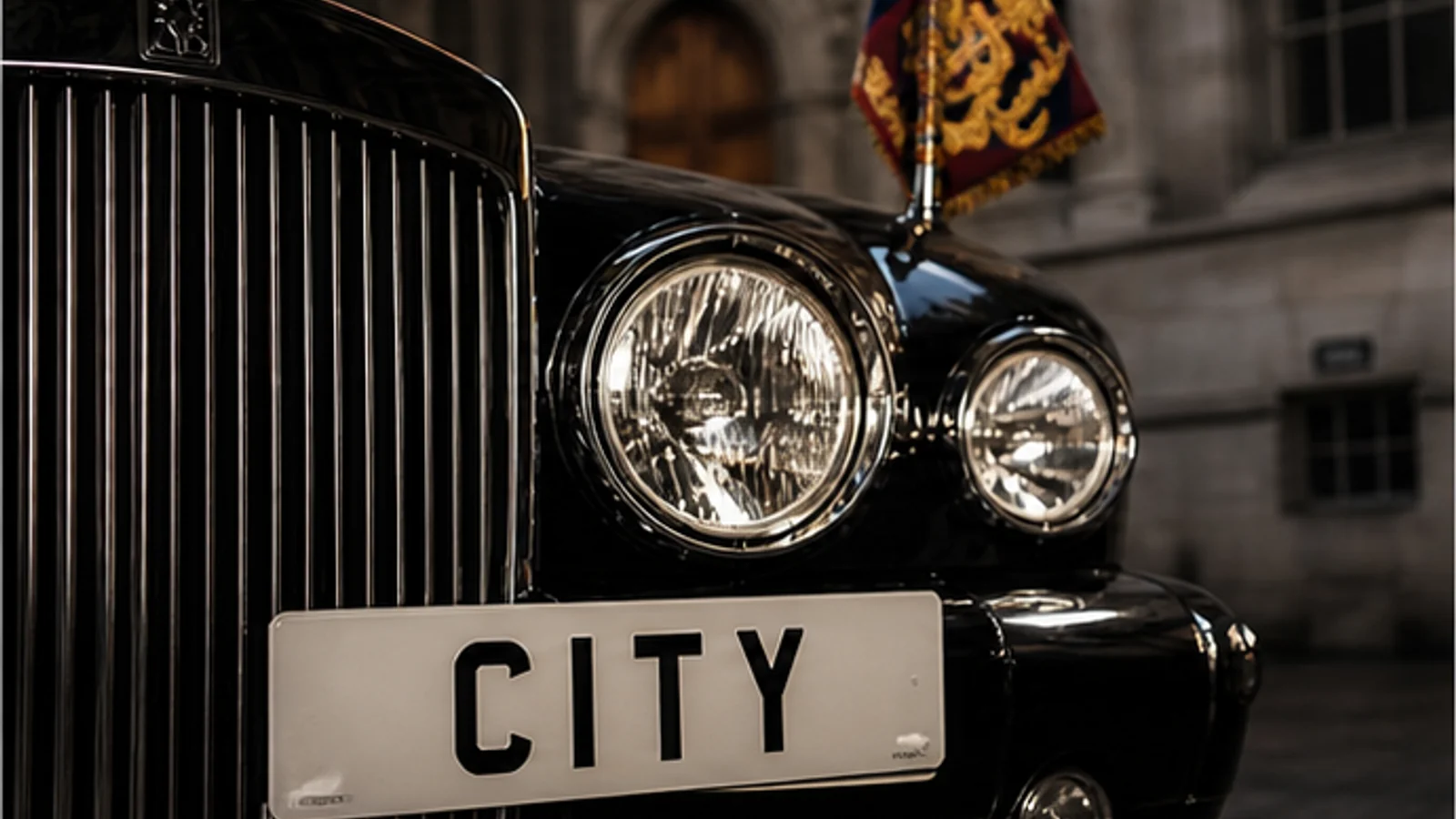
Council Owned Number Plates: A Guide to Britain's Most Overlooked Civic Treasures
When the Motor Car Act was passed in 1903 and the United Kingdom began issuing vehicle registrations for the first time, local councils found themselves in a uniquely privileged position. As the issuing authorities for their respective counties and boroughs, many of them quietly retained the most desirable combinations in their own allocation, assigning the earliest and shortest registrations to the Lord Mayor's car, the chief executive's limousine, or the civic vehicle used for ceremonial occasions.
Over a century later, that tradition has produced one of the most fascinating and underappreciated corners of the British number plate world. Councils across the country still hold some of the most valuable registrations ever issued, combinations that will almost certainly never be seen at public auction, and which represent a direct, unbroken link to the very beginning of British motoring history.
This is not an exhaustive list. But it is a substantial one.
The Collection: Council Plates Across the United Kingdom
OBB 1 Newcastle
LOM 1 Birmingham
1 WZ Belfast
AE 1 Bristol
1 VT Stoke on Trent
WE 1 London
EN 1 Bury
AEK 1 Wigan
DH 1 Walsall
NTV 1 Nottingham
ET 1 Rotherham
AEK 1 Blackpool
HG 1 Burnley
WH 1 Bolton
CB 1 Blackburn
DN 1 York
FC 1 Oxford
BK 1 Portsmouth
1 CFJ Exeter
ECC 1 Essex
ES 1 Perth
EG 1 Peterborough
ED 1 Warrington
TR 1 Southampton
NH 1 Northampton
MRD 1 Reading (Now Owned by Reading Corporation Busses)
HJY 1 Plymouth
CD 1 Brighton
KH 1 Hull
NDW 1 Newport
TTU 1 Chester
1 COV Coventry
JJA 1 Stockport
RJ 1 Salford
SOL 1 Solihull
OGR 1 Sunderland
1 MKP Kent
GCN 1 Gateshead
U 1 Leeds (Now Sold)
MVH 1 Huddersfield
DA 1 Wolverhampton
LM 0 London
L 50 Lancaster (Now in Private Ownership)
N 10 Manchester
THE 1 Barnsley
L6 EDS Leeds
M55 BBC Blackpool
G 0 Glasgow
S 0 Edinburgh
V 0 East Renfrew (was Strathclyde Regional Council)
VS 0 Inverclyde
SY 0 Midlothian
RG 0 Aberdeen
HS 0 East Renfrewshire.
The Zero Plates: A Scottish Story
There are only eight zero registrations in existence in the United Kingdom, and the story behind them is one of the most interesting quirks in British plate history.
When councils in Scotland sought to acquire number one registrations for their civic vehicles, they were met with a problem that their English counterparts had not encountered in quite the same way: the number ones had already been bought by private individuals, and those individuals had no intention of selling. Rather than go without, several Scottish councils took an imaginative approach and sought zero registrations instead, arguing that zero carried equal civic prestige.
Glasgow's G 0 and Edinburgh's S 0 were the first, issued directly as a result of the respective owners of G 1 and S 1 refusing to part with their plates. Other Scottish councils followed the same path. Strathclyde Regional Council hold V 0. Inverclyde hold VS 0. Midlothian hold SY 0. Aberdeen hold RG 0. East Renfrewshire hold HS 0.
The only English zero registration is LM 0, issued for the Mayor of London's car. The story behind it is worth telling in full. Sir Rupert de la Bere, Lord Mayor of London, purchased both LM 1 and LM 2 upon his appointment and kept them privately when he left office. His successor, Sir James Miller, a Scottish businessman who became Lord Mayor twelve years later, found himself without a civic plate that suited the office. His solution was LM 0, constructed in the same spirit as the Scottish zero plates, a workaround born of circumstance that resulted in one of the rarest format registrations in the country.
East Renfrewshire Council are currently attempting to sell HS 0, with reported values ranging anywhere between £100,000 and £300,000 depending on the source. Whether it eventually reaches the open market remains to be seen.
U1: The Plate That Paid for Public Services
Of all the council plates that have ever changed hands, U 1 has the most remarkable recent history.
U was the county code for Leeds, and U 1 was the first registration ever issued in the city following the introduction of the Motor Car Act in 1903. Rowland Winn, a motoring pioneer, founding member of the Automobile Association, and one of Leeds's first car dealers, purchased it that year and gifted it to his friend Arthur Currer Briggs upon his election as Lord Mayor of Leeds. From that moment, U 1 became the Lord Mayor's plate, passing from civic vehicle to civic vehicle for the next 120 years.
Winn himself later became Lord Mayor of Leeds in 1938 and was awarded the Freedom of the City in 1956. The plate outlasted him, outlasted Briggs, and outlasted every Lord Mayor who had ever carried it on their car.
In 2025, faced with a financial gap of over £58 million, Leeds City Council made the decision to sell U 1. After engaging three specialist dealers to manage the process, two bids were received. The winning offer of £750,000 was accepted, described by the council as one of the highest sums ever received for a private number plate in the United Kingdom. The buyer's identity was kept confidential as a condition of the sale. The Lord Mayor's car now wears L6 EDS, a plate the council already owned, in its place.
A piece of civic history, sold to balance a budget. The value of what a number plate can represent in both sentimental and financial terms, captured in a single transaction.
F1: The Plate Essex Sold for £375,000 and Will Never Stop Regretting
Essex County Council held F1 for over a century. First issued in 1904, it was the very first registration ever assigned by the Essex County Register of Motors, originally belonging to the county surveyor Percy John Sheldon, who attached it to his 15hp Panhard Levassor. After a period in private hands, it was returned to the council in 1955 and subsequently carried on a succession of civic limousines: a Darracq Torpedo, a Humber, a Daimler, and a Jaguar.
In January 2008, Essex County Council sold F1 privately to Afzal Kahn, founder of Kahn Design, for £375,000. At the time, it was a record sale for any British number plate, eclipsing the previous record of £331,000 paid for M1. The council put the proceeds toward an advanced driver training programme for young motorists in the county.
Kahn was asked shortly after whether he thought he had paid a fair price. His answer was straightforward: he thought it was worth ten times what he paid. By 2013 he had already been offered £6 million and turned it down. The plate has since been listed with an asking price in the region of £12 million before VAT. Whether it ever sells at that figure, F1 is categorically the most valuable number plate ever to have passed through a British council's hands, sold at a fraction of what it would command today.
Why This Matters
The council plate collection, taken as a whole, represents something that even the most serious private collectors cannot replicate: civic provenance attached to the very earliest registrations ever issued in each part of the country. Most of these plates have never been to market. Many will never go to market. And for every U 1 and F1 that has eventually found its way to a private buyer, there are dozens more sitting quietly on Lord Mayors' cars and chief executives' limousines, carrying a century of history on every journey.
The question worth asking, particularly at a time when councils across the United Kingdom face significant financial pressure, is how many more are quietly reassessing what they hold.
Plates mentioned
Previewing 16 of 58 referenced plates
Value your plate for free
Get a grounded market range, dealer valuations, and competitive offers — all in one place.